
CODE-006: OSHA Fall Protection Training for Competent and Qualified Person
Home / Training
Duration: 1 days
Modules: 11
Sectors: All Industries
Number of Certificate: 1 Assessment & Certification
Course Fee
- FREE access to RVU
- $120 PDF & Original Certificates
- $85 PDF Certificates
Shipping & Handling not included for original certificates

Program Overview:
The OSHA Fall Protection for Competent and Qualified Person Course is designed to provide participants with the knowledge, skills, and authority required to plan, implement, and supervise fall protection systems in the workplace, in compliance with OSHA 29 CFR 1926 Subpart M (Fall Protection).
This course emphasizes the distinction between a Competent Person and a Qualified Person, focusing on their roles in hazard identification, system design, inspection, and enforcement of fall protection measures.
Participants will gain practical understanding of:
- Fall hazard recognition and risk assessment
- Selection and use of fall protection systems
- Inspection and maintenance of equipment
- Safe work practices at heights
- Rescue planning and emergency procedures
Objectives:
- Understand the hazards and risks associated with working at height.
- Learn regulatory requirements (OSHA, EM 385-1-1, and other applicable standards).
- Master the correct use of fall protection systems, harnesses, and lifelines.
- Develop safe work procedures, including risk assessments and rescue plans.
- Identify common mistakes and how to prevent them.
Key Features:
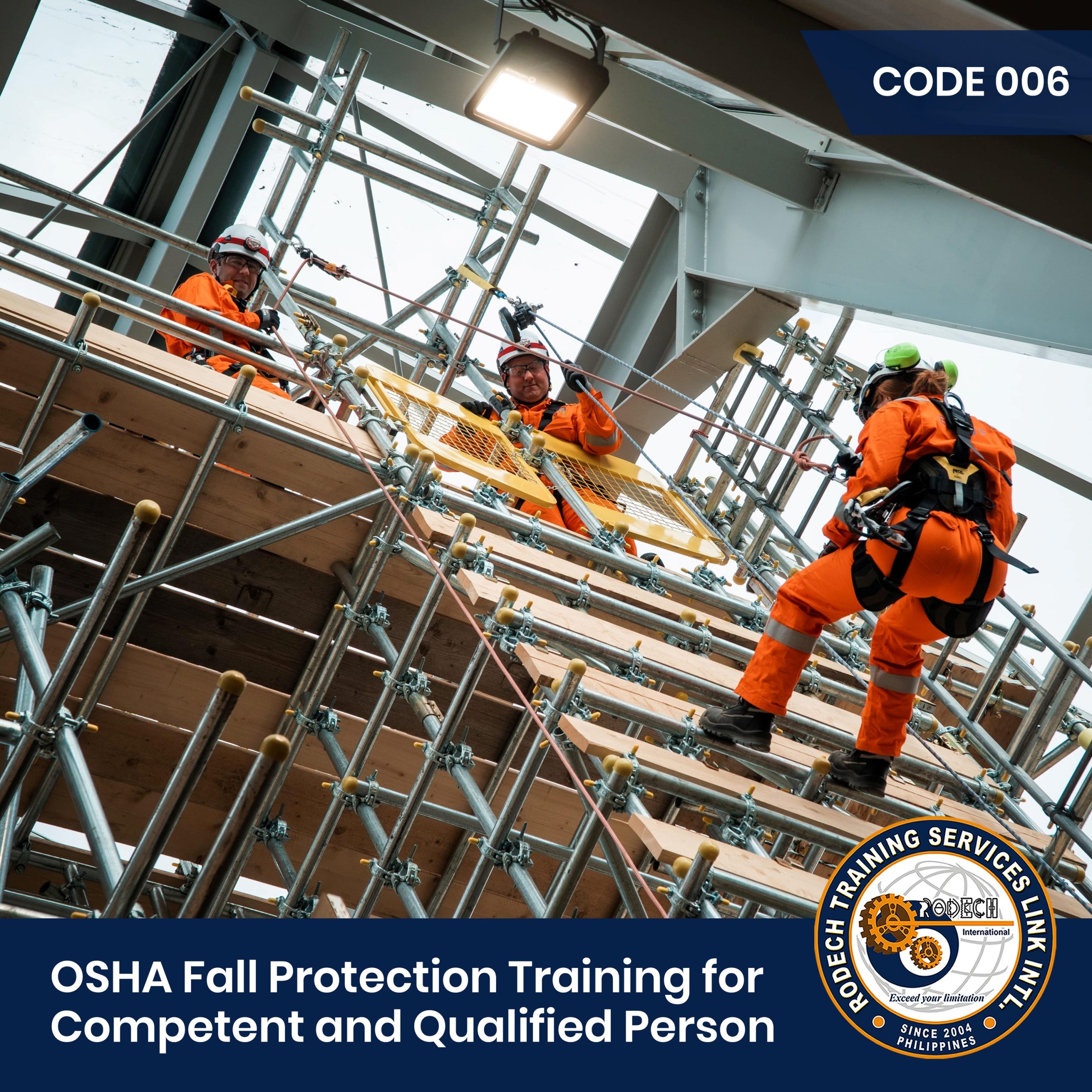
- Hands-on demonstrations of fall protection equipment.
- Practical exercises on safe access and egress techniques.
- Guidance on emergency response and rescue operations.
Ideal For:
- Safety Officers and EHS Professionals
- Supervisors and Team Leaders
- Workers performing elevated tasks
- Construction and maintenance personnel
Course Modules:
Module 1 — OSHA Regulatory Framework
• OSHA Subpart M overview
• Definitions: Authorized, Competent, Qualified
• Employer responsibilities
Module 2 — Fall Hazard Recognition
• Types of fall hazards
• Predictable vs. existing hazards
• Hazard analysis techniques
Module 3 — Fall Protection Systems
• Guardrail systems
• Personal Fall Arrest Systems (PFAS)
• Safety nets
• Warning line systems
• Controlled access zones
• Safety monitoring systems
Module 4 — System Erection, Use, and Inspection
• Procedures for erecting, maintaining, and disassembling systems
• Inspection criteria for harnesses, lanyards, anchors
• Equipment storage and handling
Module 5 — Fall Protection Plans
• When plans are required
• Competent Person responsibilities
• Documentation and implementation
Module 6 — Rescue & Emergency Response
• Suspension trauma
• Self-rescue vs. assisted rescue
• Rescue equipment selection
Module 7 — Practical Skills
• Hands-on inspection
• Anchor point evaluation
• System setup and hazard correction
Module 8 — Certification Requirements
• Written exam
• Practical demonstration
• OSHA-required training documentation