





TRAINING
Empowering Industries
Through Safety and Skills


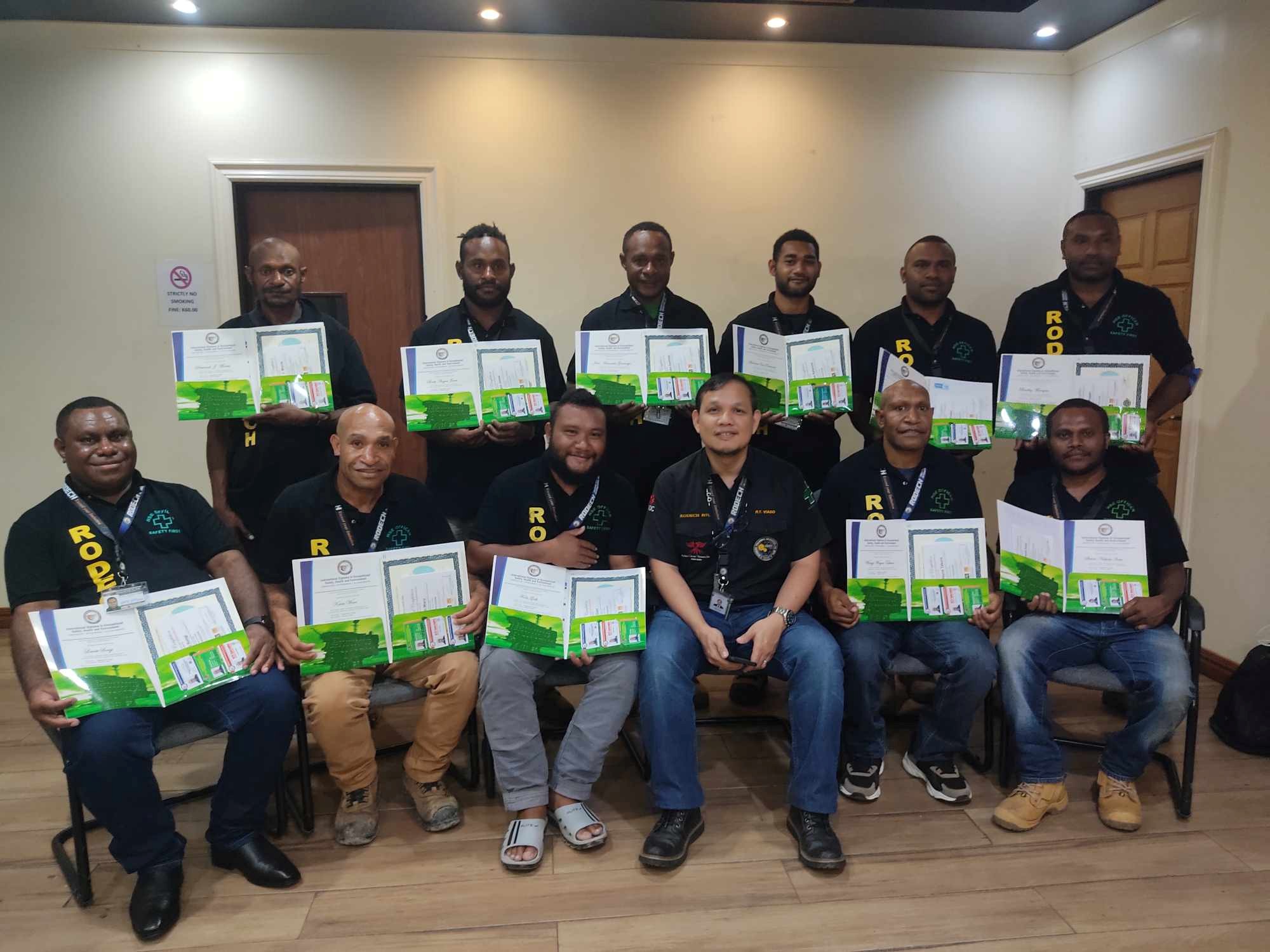
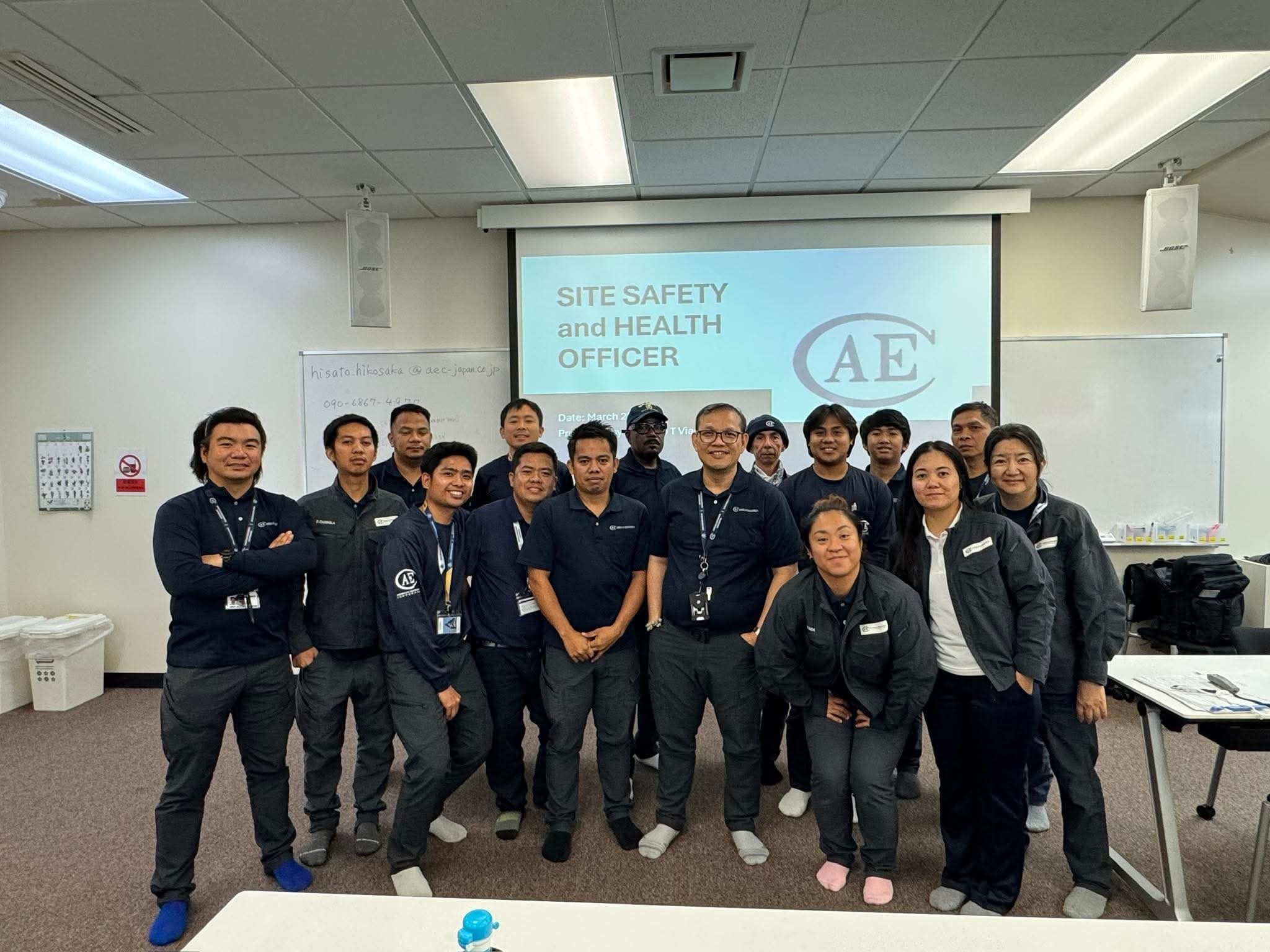
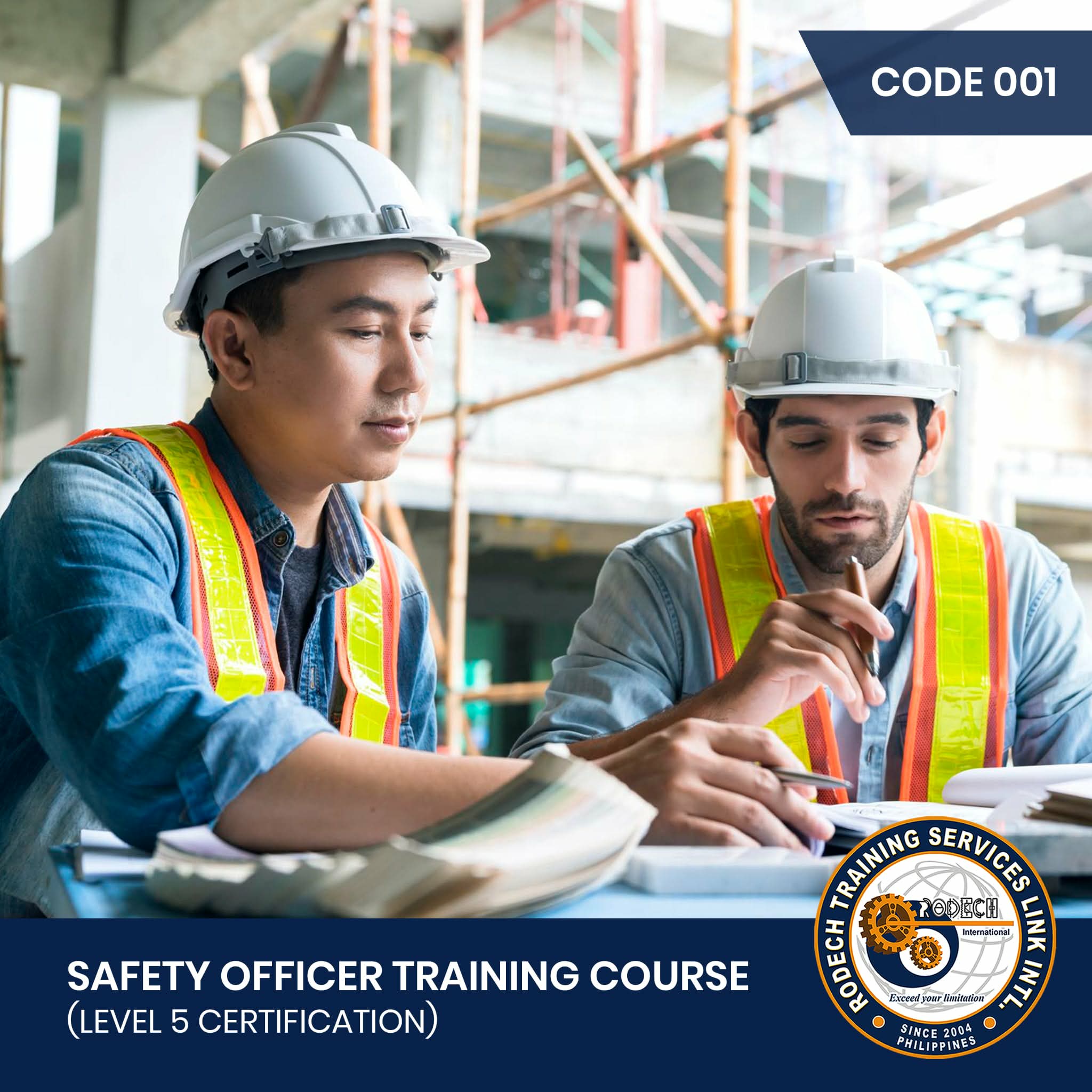
Safety Officer Training Course (Level 5 Certification) -CODE 001
Safety Officer Training Course (SOTC) is a comprehensive program designed for individuals aspiring to start their careers as safety professionals abroad. The program equips participants with essential knowledge of Environment, Health, and Safety (EHS) policies and practices commonly adopted by international companies in the Construction, Petrochemical, and Oil & Gas industries.
Through intensive training, participants gain practical skills and confidence to perform effectively as safety professionals. The program encourages individuals to be proactive, driven, and ready to embrace the challenges of the dynamic EHS industry.
Course Objectives
By the end of the course, participants will be able to:
Understand your role as Safety Professional, Safety Regulations and Standards
- Interpret applicable safety regulations (e.g., OSHA, EM 385‑1‑1, company safety policies).
- Understand the roles and responsibilities of a Safety Officer.
Identify and Control Workplace Hazards
- Recognize physical, chemical, biological, and ergonomic hazards.
- Apply hierarchy of controls to eliminate or reduce risks.
Implement Effective Safety Programs
- Develop and implement Site Safety and Health Plans (SSHP).
- Conduct Job Hazard Analyses (JHA) / Activity Hazard Analyses (AHA).
Perform Safety Inspections and Audits
- Conduct routine safety inspections and observations.
- Identify non-compliances and recommend corrective actions.
Manage Incident Prevention and Reporting
- Investigate accidents and near-misses.
- Prepare safety reports and root cause analyses.
Promoting a Positive Safety Culture
- Communicate safety expectations effectively.
- Encourage workforce participation and accountability.
Key Features of the Course
Standards-Based Curriculum
- Aligned with recognized safety standards (OSHA, EM 385‑1‑1, ISO 45001 concepts where applicable).
Practical, Field-Oriented Training
- Real-life case studies and scenario-based learning.
- Sample forms, checklists, and safety documentation.
Competency-Focused Modules
- Emphasis on both technical safety knowledge and leadership skills.
- Clear guidance on Safety Officer duties and authority.
Interactive Learning Approach
- Group discussions, hazard identification exercises, and workshops.
- Hands-on development of AHAs, toolbox talks, and safety plans.
Assessment and Certification
- Knowledge assessments to ensure learning outcomes are met.
- Certificate of completion for qualified participants.
Ideal for:
- Entry Level
- College Level (Any Course)
- With or without experience
- Physically and mentally fit
- Good Moral Character
Benefits of the Course
- Build confidence and competence in safety management roles.
- Qualified to handle the job of a Safety Professional
- Enhances understanding of compliance requirements.
- Improves decision-making during unsafe conditions or emergencies.
Strengthens professional qualifications and career advancement.

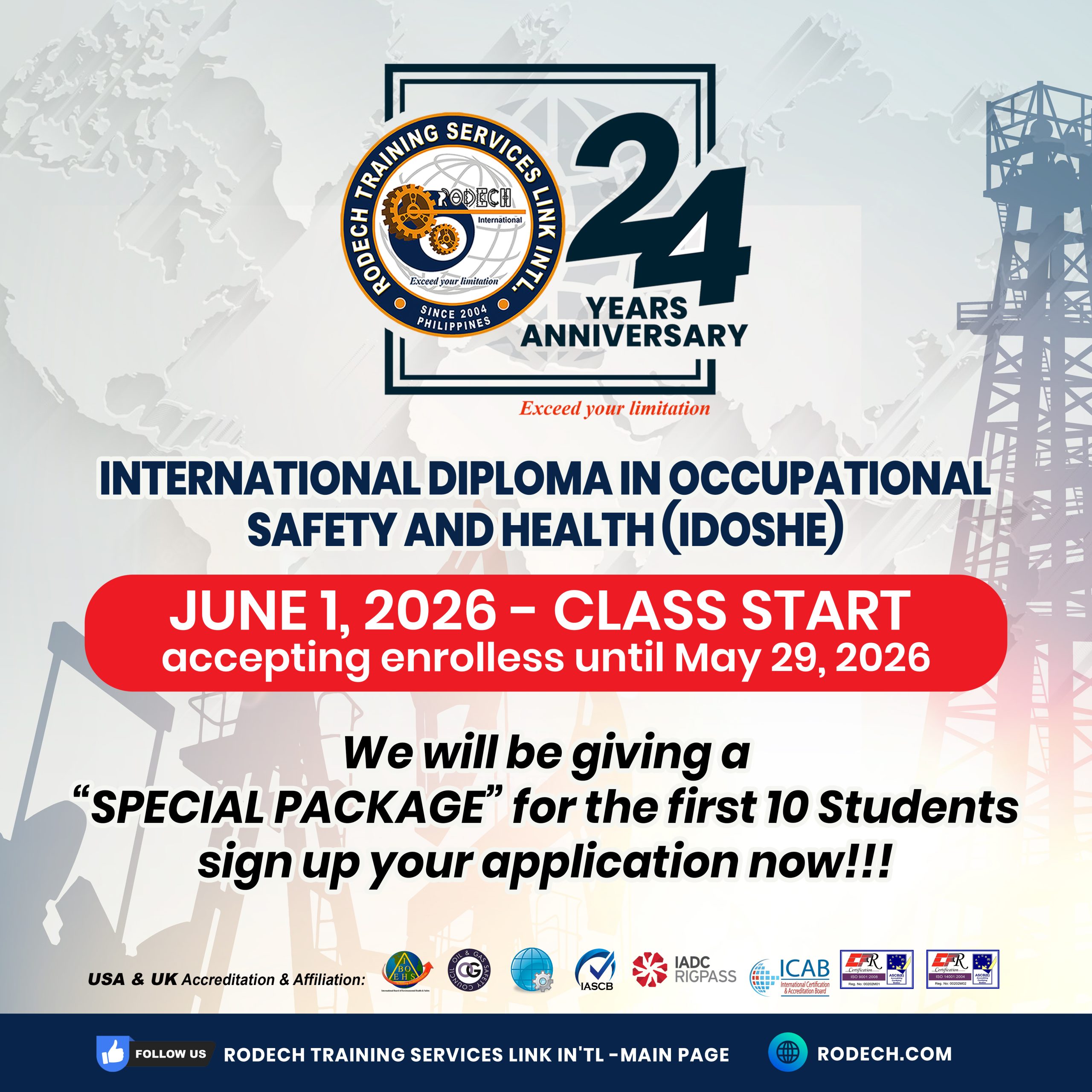
IDOSHE (Level 6 Diploma Certification)- CODE 002 Program Overview
The IDOSHE Professional Diploma Program develops comprehensive knowledge in occupational health and safety, focusing on real-world applications in daily work environments. It is an intermediate-level award tailored for individuals who want to expand their understanding of EHS principles and practices, particularly those adopted by international companies in the Construction, Petrochemical, and Oil & Gas industries.
Through advanced training, participants gain the skills and confidence to excel in the global EHS industry, maximize work performance, and become strong leaders in their respective fields.
Course Objectives
By the end of the program, participants will be able to:
Apply International OSH&E Standards
- Understand and interpret international safety legislation and standards (e.g., OSHA principles, ILO conventions, ISO 45001, ISO 14001).
- Align organizational safety systems with global best practices.
Manage High‑Risk Industrial Hazards
- Identify, evaluate, and control hazards specific to construction, petrochemical, and oil & gas sectors.
- Implement risk assessments for confined spaces, hot work, lifting operations, working at height, and process safety hazards.
Develop and Implement HSE Management Systems
- Design and maintain effective Occupational Health, Safety, and Environmental (OHSE) Management Systems.
- Integrate safety, health, and environmental controls into project planning and execution.
Ensure Environmental Protection and Sustainability
- Assess environmental impacts and apply pollution prevention measures.
- Manage waste, emissions, spills, and environmental incidents.
Investigate Incidents and Prevent Recurrence
- Conduct accidents, incident, and near‑miss investigations.
- Perform root cause analysis and implement corrective and preventive actions.
Demonstrate Professional Safety Leadership
- Promote safety culture and leadership at all organizational levels.
- Communicate effectively with workforce, management, and regulatory authorities.
Key Features of the Program Industry‑Specific Coverage
- Construction site safety and civil engineering hazards
- Petrochemical process safety and chemical risk management
- Oil & gas exploration, drilling, production, and shutdown activities
Internationally Benchmarked Curriculum
Based on globally recognized standards and frameworks:
- OSHA & ILO safety principles
- ISO 45001 (Occupational Health & Safety)
- ISO 14001 (Environmental Management)
- Process Safety Management (PSM) concepts
Practical & Applied Learning
- Real‑world case studies from high‑risk industries
- Hazard identification workshops and scenario‑based exercises
- Preparation of risk assessments, method statements, and HSE plans
Competency‑Based Assessment
- Written assignments and practical evaluations
- Projects focused on real operational environments
- Assessment aligned with professional certification expectations
Professional Recognition
Enhances eligibility for senior HSE roles such as:
- HSE Manager
- Safety Superintendent
- Environment & Sustainability Officer
- Project Safety Advisor
Ideal for:
- Graduate of SOTC Level 5 program
- BOSH or COSH Graduate
- Loss Control Management Certificate
- DOLE OSH Practitioner
Course Benefits
Benefits to Participants
- Developed advanced, internationally recognized HSE competence
- Enhance career opportunities in construction, petrochemical, and oil & gas sectors
- Build confidence in managing high‑risk and complex operations
- Supports progression toward professional safety certifications
Benefits to Employers
- Strengthens organizational safety leadership capability
- Reduces accidents, occupational diseases, and environmental incidents
- Improves legal compliance and regulatory audit readiness
- Supports sustainable operations and corporate social responsibility (CSR)
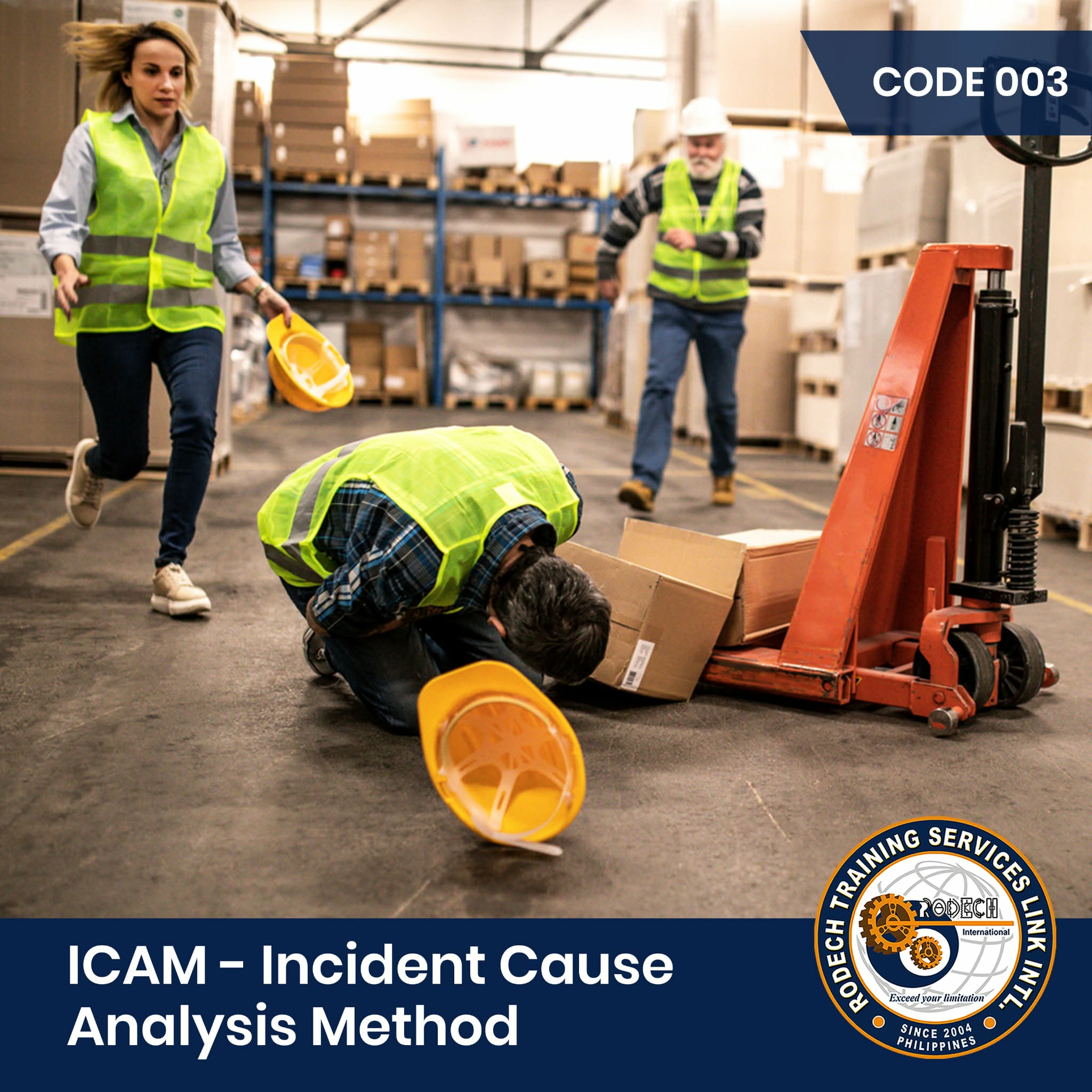
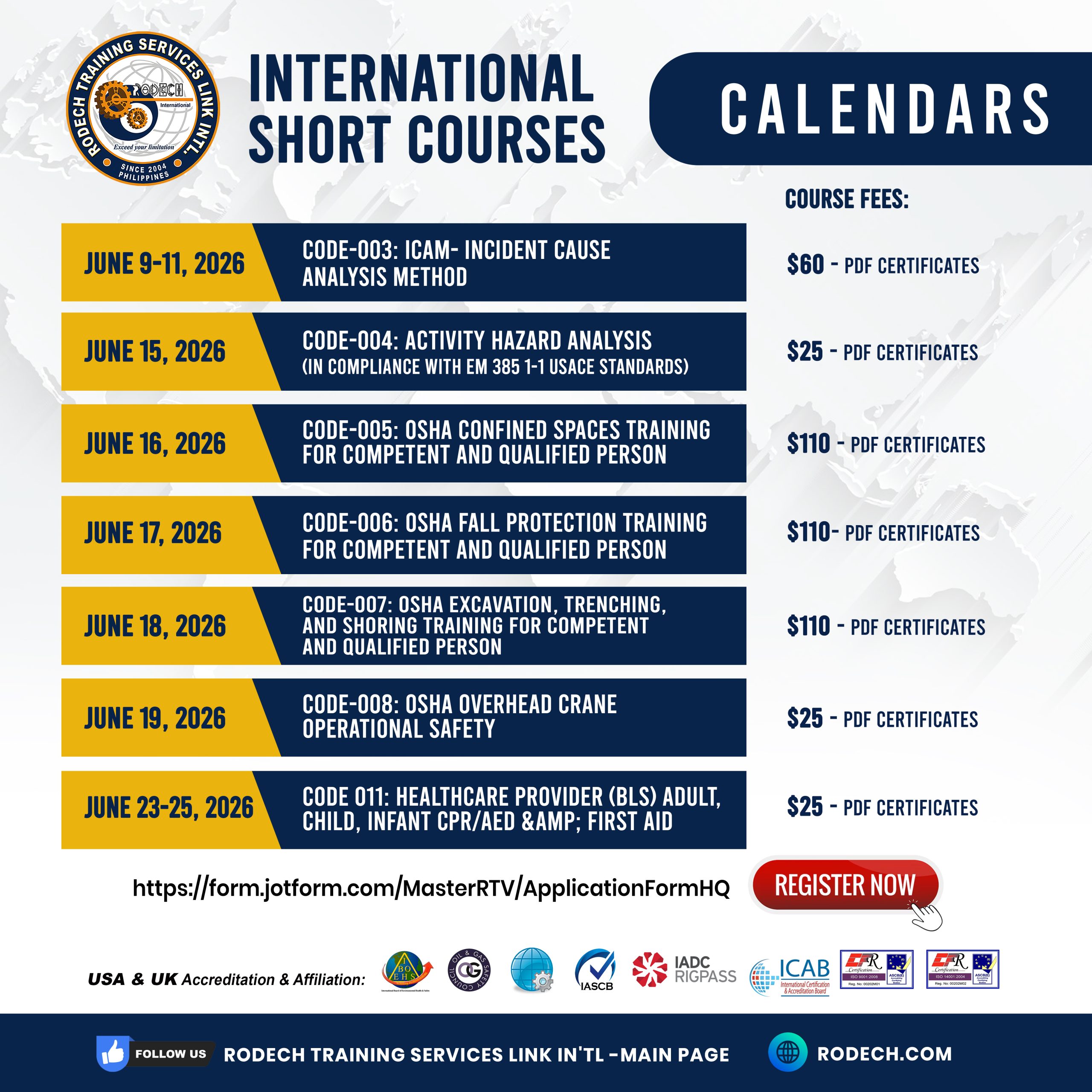
ICAM- Incident Cause Analysis Method – CODE 003
Objectives:
- Understand the principles and framework of ICAM.
- Learn how to collect and analyze evidence following an incident.
- Identify contributing factors, including organizational, task, and environmental elements.
- Develop actionable recommendations to improve safety systems and prevent future incidents.
Key Features:
- Practical case studies and real-world scenarios.
- Hands-on exercises in incident investigation and reporting.
- Focus on compliance with international standards and best practices.
Ideal For:
- Safety Officers
- EHS Managers
- Supervisors and Team Leaders
- Anyone involved in incident investigation and reporting
Benefits:
- Enhance your ability to conduct thorough investigations.
- Improve organizational safety culture through systemic analysis.
- Gain a globally recognized skill set for career advancement.
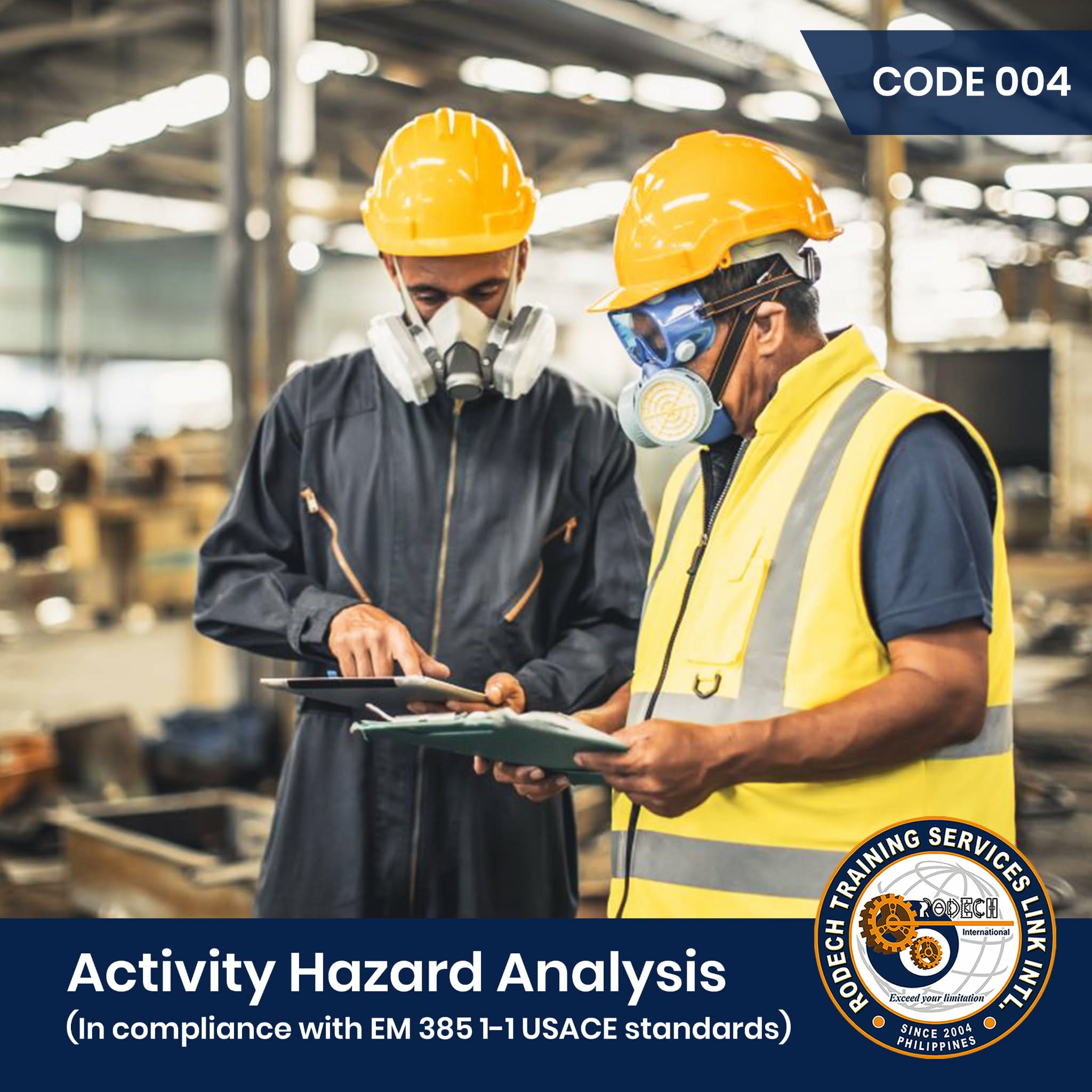
Activity Hazard Analysis (In compliance with EM 385 1-1 USACE standards)- CODE 004
Objectives:
- Understand the purpose and requirements of AHA under EM 385-1-1.
- Learn how to identify activity-specific hazards and assess associated risks.
- Develop effective control measures to mitigate hazards.
- Gain practical experience in preparing and reviewing AHA documents for USACE projects.
Key Features:
- Step-by-step guidance on AHA preparation and approval process.
- Hands-on exercises using real-world scenarios.
- Compliance focus: EM 385-1-1 (March 2024 edition).
- Best practices for integrating AHA into Accident Prevention Plans (APP).
Ideal For:
- Safety Officers and Specialists
- Project Managers and Supervisors
- Quality and Compliance Professionals
- Anyone involved in USACE projects or safety documentation
Benefits:
- Ensure compliance with USACE safety standards.
- Improve hazard identification and risk control skills.
- Enhance project safety performance and reduce incidents.
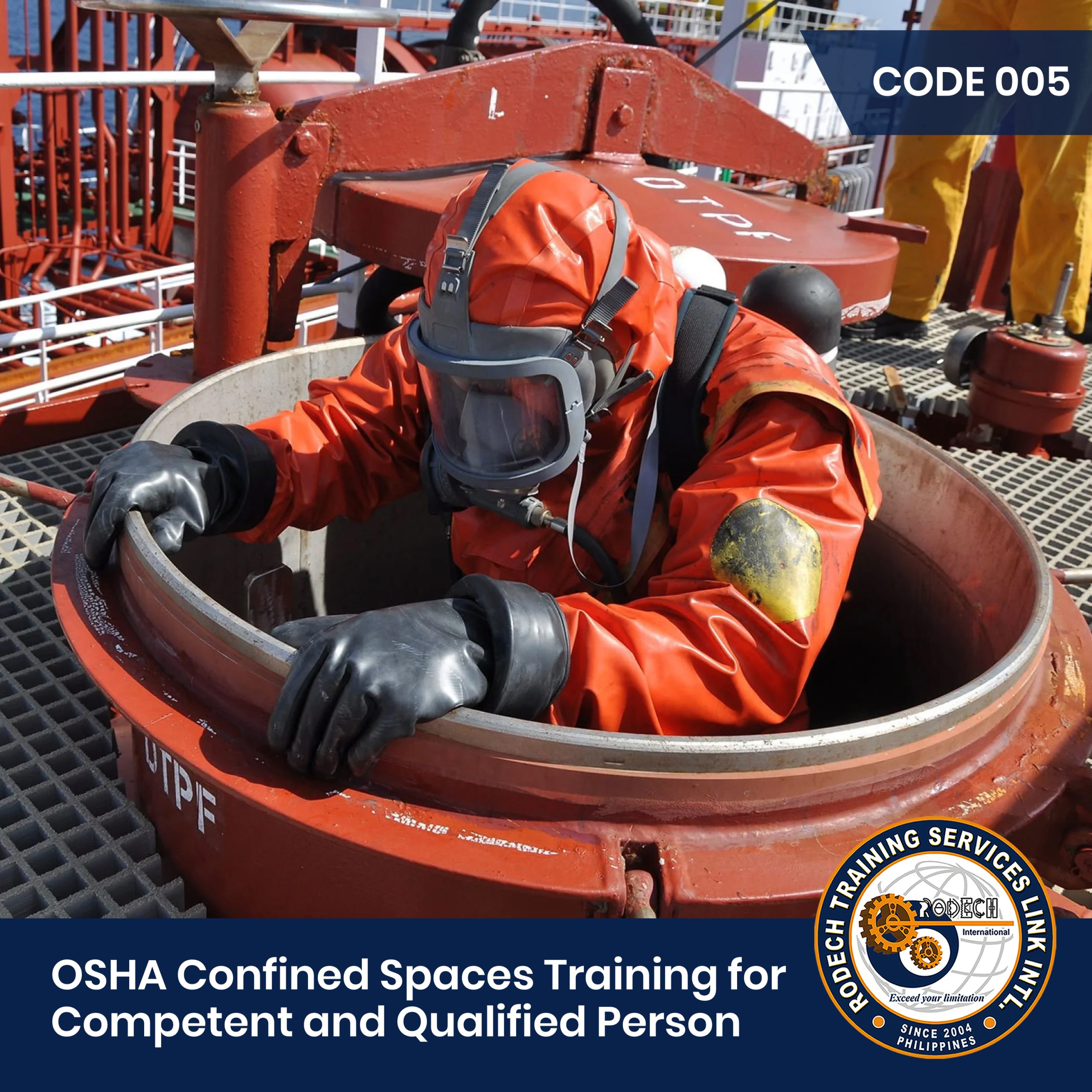
OSHA Confined Space Entry -CODE 005
The OSHA Confined Space Entry Course for Competent Person is designed to provide participants with the knowledge, skills, and authority required to safely manage confined space operations, in accordance with OSHA 29 CFR 1910.146 (Permit-Required Confined Spaces) and applicable construction standards (29 CFR 1926 Subpart AA).This course focuses on the roles and responsibilities of:
- Entry Supervisor
- Authorized Entrant
- Attendant
Participants will learn how to identify confined space hazards, implement control measures, conduct atmospheric testing, and ensure safe entry, work, and exit procedures.The training emphasizes hazard recognition, permit systems, emergency preparedness, and rescue planning, ensuring participants can effectively protect workers from life-threatening conditions such as oxygen deficiency, toxic gases, and engulfment.
Objectives:
- Define confined spaces and identify associated hazards.
- Understand legal requirements and standards (OSHA, EM 385-1-1, and other applicable regulations).
- Learn proper entry procedures, including permits, atmospheric testing, and ventilation.
- Master the use of personal protective equipment (PPE) and rescue equipment.
- Develop emergency response plans for confined space incidents.
Key Features:
- Hands-on exercises with real-world confined space scenarios.
- Practical demonstrations of gas monitoring and rescue techniques.
- Compliance-focused training aligned with international standards.
Ideal For:
- Safety Officers and EHS Professionals
- Supervisors and Team Leaders
- Workers involved in confined space operations
- Emergency Response Teams
Benefits:
- Reduce risks and prevent fatalities in confined spaces.
- Ensure compliance with regulatory requirements.
- Gain confidence and competence in confined space entry and rescue.
Duration: 24 Hours
Assessment: Written Exam (70% passing mark)
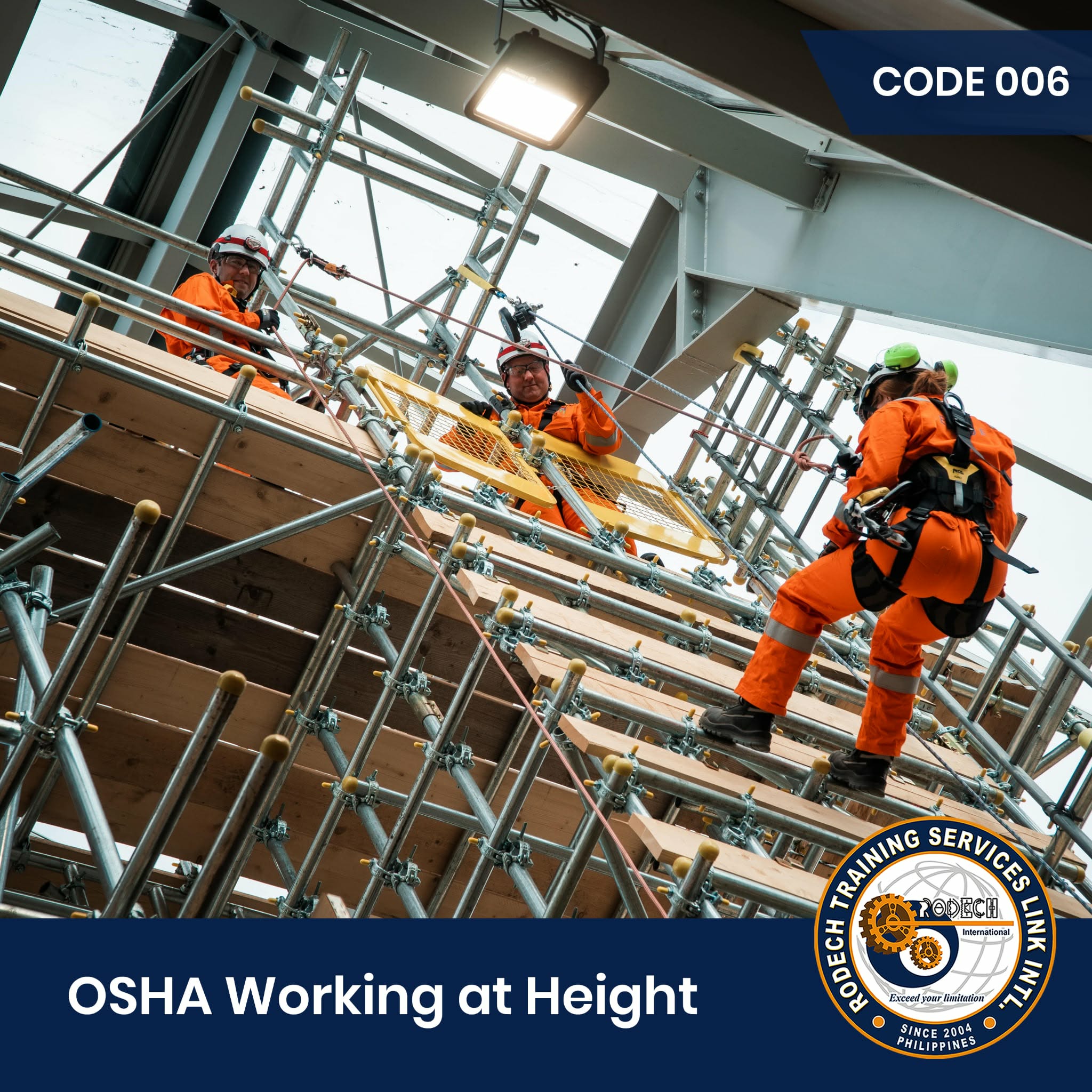
OSHA Working at Height – CODE 006
Falls from heights remain one of the leading causes of workplace injuries and fatalities. This training program equips participants with the knowledge and practical skills to safely perform tasks at height, in compliance with international standards and best practices.
Objectives:
- Understand the hazards and risks associated with working at height.
- Learn regulatory requirements (OSHA, EM 385-1-1, and other applicable standards).
- Master the correct use of fall protection systems, harnesses, and lifelines.
- Develop safe work procedures, including risk assessments and rescue plans.
- Identify common mistakes and how to prevent them.
Key Features:
- Hands-on demonstrations of fall protection equipment.
- Practical exercises on safe access and egress techniques.
- Guidance on emergency response and rescue operations.
Ideal For:
- Safety Officers and EHS Professionals
- Supervisors and Team Leaders
- Workers performing elevated tasks
- Construction and maintenance personnel
Benefits:
- Reduce fall-related incidents and fatalities.
- Ensure compliance with safety regulations.
- Build confidence in working safely at heights.
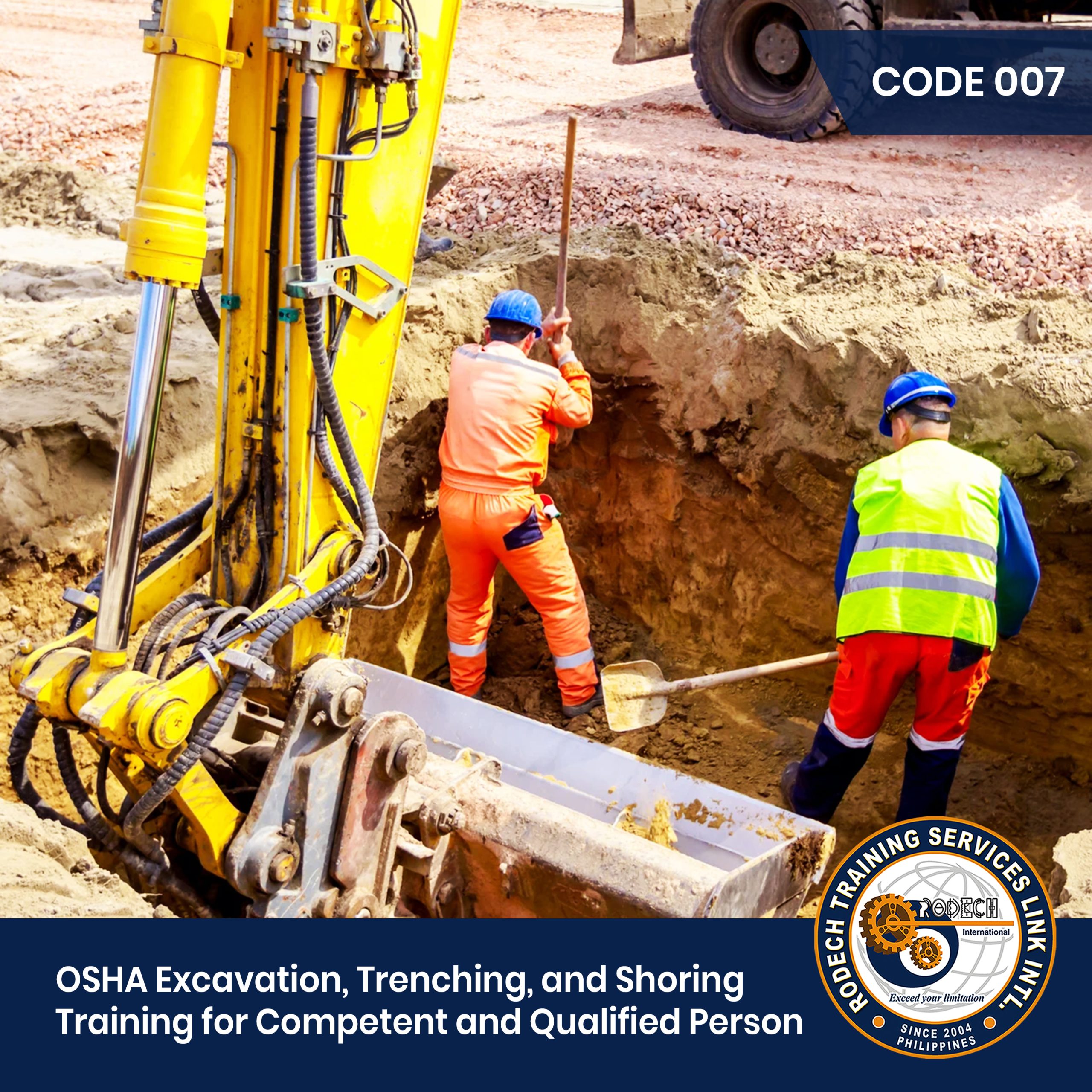
CODE 007: OSHA Excavation Trenching and Shoring for Competent Person
Excavation work is among the most hazardous activities in construction, often involving risks such as cave-ins, falls, hazardous atmospheres, and equipment-related incidents. This training program provides participants with the knowledge and practical skills to perform excavation tasks safely and in compliance with international standards.
Objectives:
- Understand excavation hazards and risk factors.
- Learn regulatory requirements (OSHA, EM 385-1-1, and other applicable standards).
- Master protective systems: sloping, shoring, and shielding.
- Identify soil types and their impact on excavation safety.
- Develop safe work procedures and emergency response plans.
Key Features:
- Hands-on demonstrations of protective systems.
- Practical exercises in hazard identification and control.
- Compliance-focused training is aligned with the best global practices.
Ideal For:
- Safety Officers and EHS Professionals
- Supervisors and Foremen
- Workers involved in excavation and trenching operations
Benefits:
- Prevent cave-ins and excavation-related incidents.
- Ensure compliance with safety regulations.
- Build confidence in managing excavation hazards effectively.
Duration: 24 Hours
Assessment: Written Examination (70% passing mark)
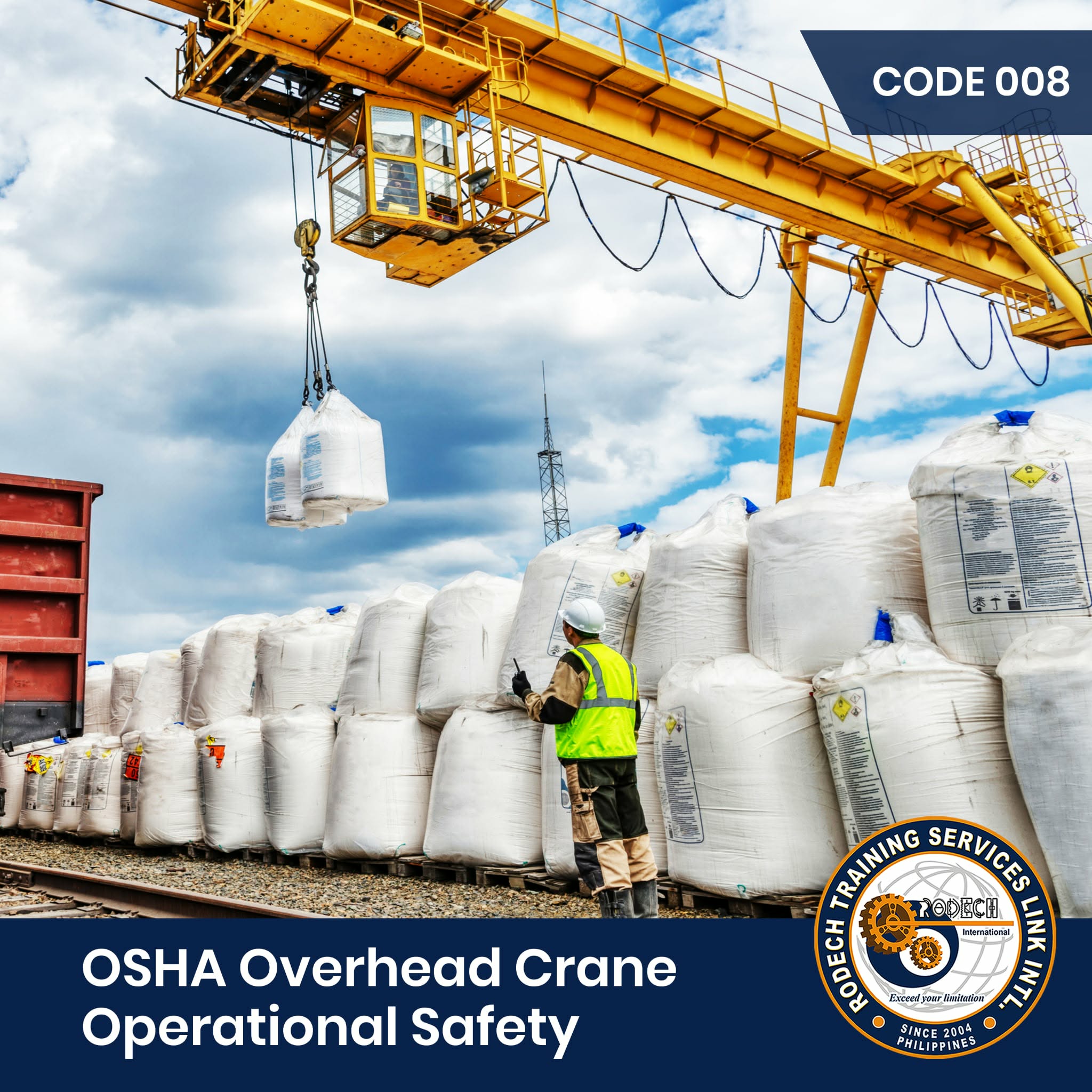
OSHA Overhead Crane Operational Safety – CODE 008
Overhead operations, such as crane lifting, hoisting, and material handling, pose significant hazards to workers and equipment. This training program equips participants with the knowledge and skills to plan, execute, and monitor overhead operations safely, minimizing risks and ensuring compliance with international standards.
Objectives:
- Understand hazards associated with overhead lifting and suspended loads.
- Learn regulatory requirements (OSHA, EM 385-1-1, and other applicable standards).
- Master safe rigging practices and load control techniques.
- Develop effective communication and signaling during lifting operations.
- Implement emergency response procedures for overhead incidents.
Key Features:
- Practical demonstrations of rigging and lifting equipment.
- Hands-on exercises in load calculations and safe lifting plans.
- Compliance-focused training aligned with global best practices.
Ideal For:
- Crane Operators and Riggers
- Safety Officers and EHS Professionals
- Supervisors and Project Managers
- Workers involved in lifting and hoisting operations
Benefits:
- Reduce risks of dropped loads and overhead accidents.
- Ensure compliance with safety regulations.
- Build confidence in managing overhead operations effectively.

ISO 45001 Lead Auditor -CODE 009
This advanced training program is designed for professionals who want to develop the skills and knowledge required to conduct and lead audits of Occupational Health and Safety Management Systems (OHSMS) based on ISO 45001:2018 standards. Participants will learn how to plan, execute, report, and follow up on audits in compliance with international best practices.
Objectives:
- Understand the requirements and structure of ISO 45001:2018.
- Learn auditing principles, techniques, and ethical considerations.
- Gain expertise in planning and conducting internal and external audits.
- Develop skills to lead audit teams and manage audit programs.
- Prepare for certification as an ISO 45001 Lead Auditor.
Key Features:
- Practical case studies and role-play exercises.
- Guidance on risk-based thinking and continual improvement.
- Compliance-focused training aligned with ISO standards.
- Certificate of completion recognized internationally.
Ideal For:
- Safety Managers and EHS Professionals
- Internal Auditors and Compliance Officers
- Consultants and Quality Managers
- Anyone seeking ISO 45001 Lead Auditor certification
Benefits:
- Enhance your auditing competence and leadership skills.
- Improve organizational compliance and safety performance.
- Gain a globally recognized qualification for career advancement.
WELCOME TO RODECH TRAINING SERVICES
The pioneering with 23 years of service in providing Safety Officer Training Course and the International Diploma in Occupational Safety, Health and Environment for Construction, Petrochemical and Oil and Gas industry in the Philippines.
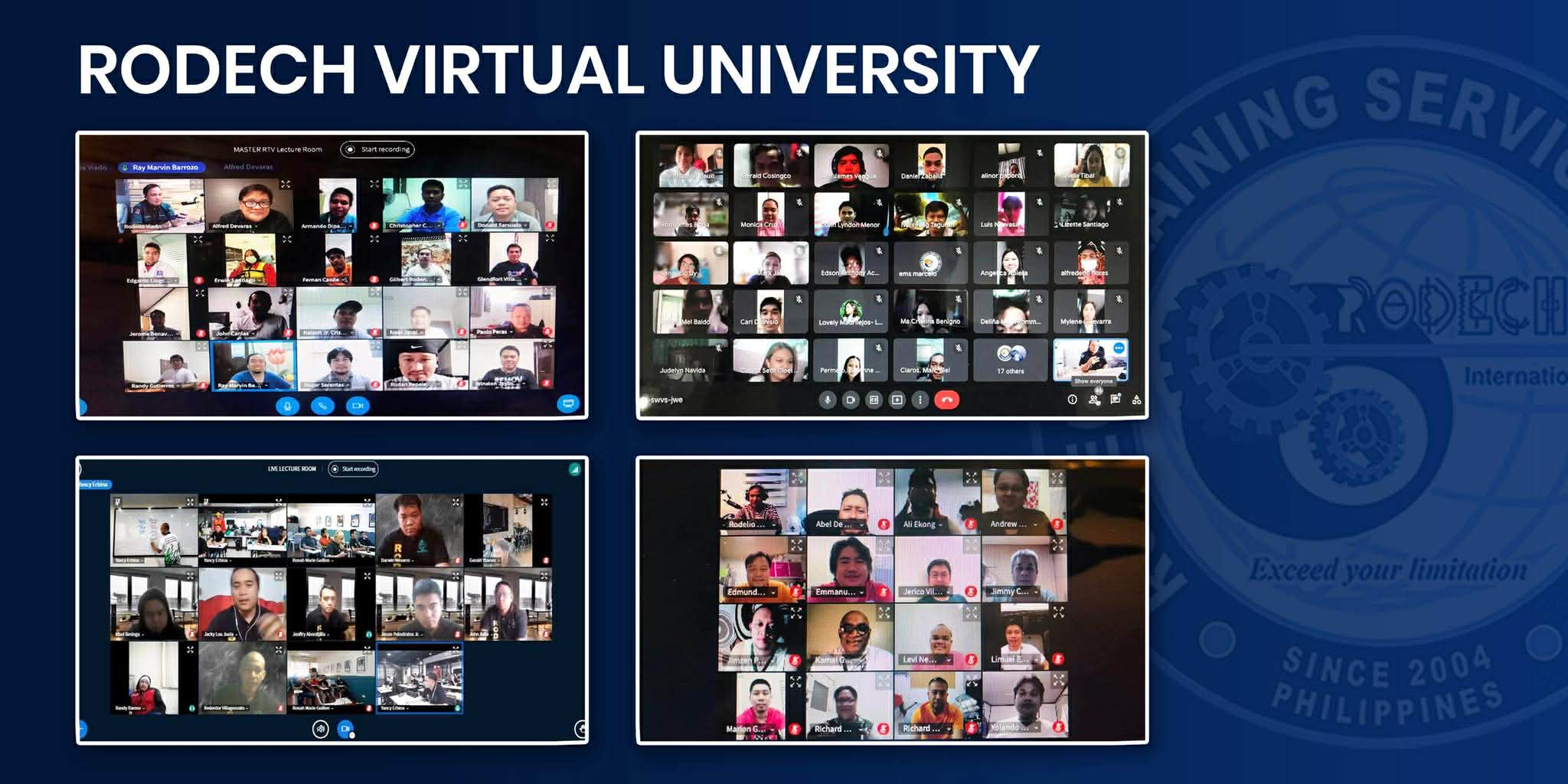
Rodech Virtual University
Learn Anytime, Anywhere
RODECH Virtual University (RVU) is our fully online training platform that allows professionals to complete courses remotely without compromising quality.
- 24/7 access to course materials, video lectures, and interactive sessions
- Online exams and assessments
- Certificates and diplomas upon completion
- Designed for offshore, remote, and on-site personnel

Join the RODECH Community
Our graduates are part of a growing network of professionals in oil & gas,
construction, and industrial sectors. As a RODECH alumni