
CODE 015: NFPA Fire Safety and Prevention
Home / Training
Duration: 1 day
Modules:
Sectors: All Industries
Number of Certificate: 1 Assessment & Certificate
Course Fee
- FREE access trial
- $29 PDF & Original Certificates
- $20 PDF Certificates
Shipping & Handling not included for original certificates

Program Overview
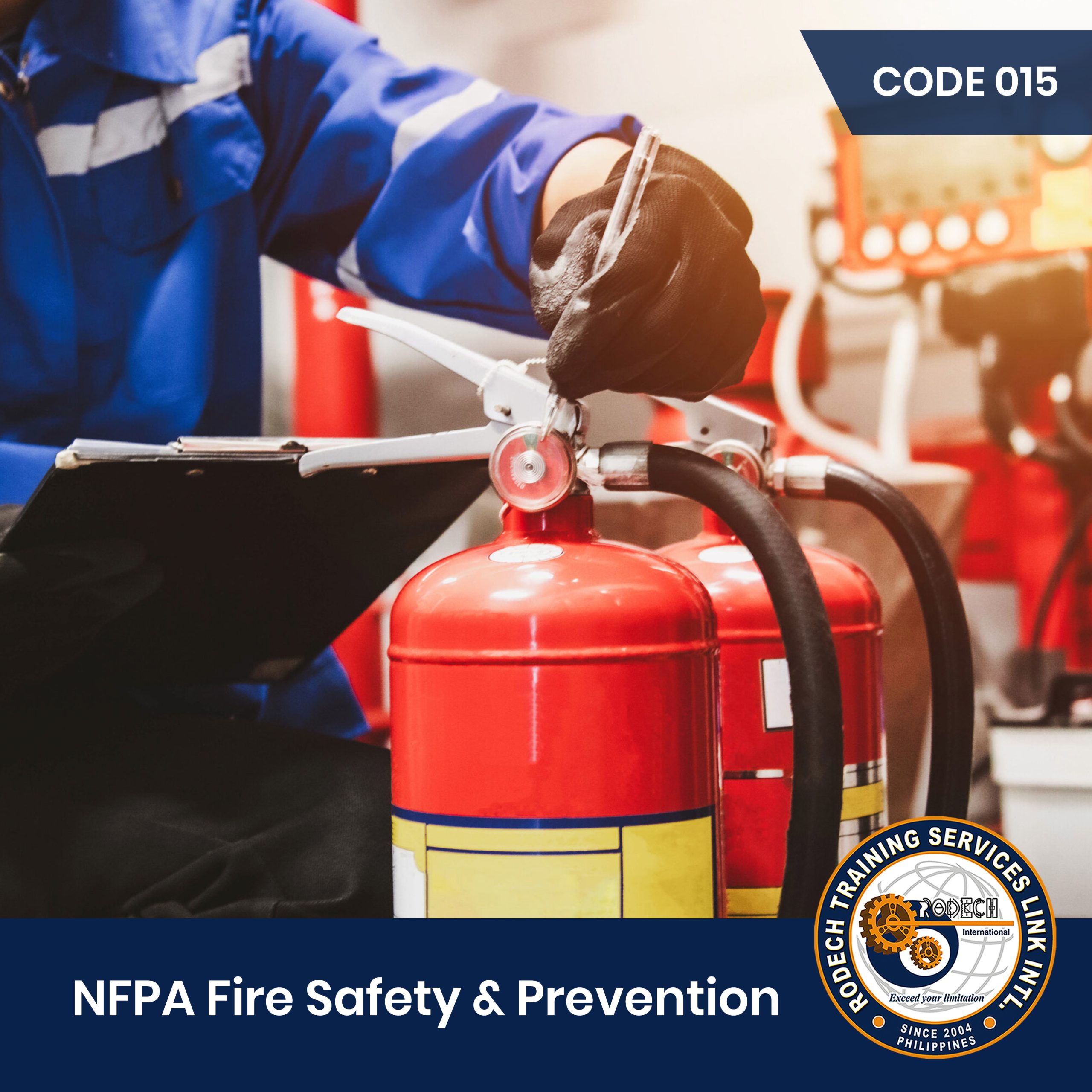
A fire safety and prevention program teaches participants how to recognize fire hazards, implement preventive measures, use fire protection systems, and respond effectively during fire emergencies. It covers ignition sources, fuel controls, fire behavior, evacuation procedures, and the proper use of extinguishers and suppression systems. The program supports compliance with standards such as OSHA, NFPA, and local fire codes.
Program Objectives
Participants completing the program should be able to:
- Explain the basic principles of fire behavior and the fire triangle/tetrahedron.
- Identify common workplace fire hazards and implement preventive measures.
- Understand fire classifications (A, B, C, D, K) and match them with appropriate extinguishers.
- Operate fire extinguishers safely using PASS and recognize when not to fight a fire.
- Interpret fire protection systems such as alarms, sprinklers, detectors, and suppression systems.
- Follow evacuation procedures, including routes, assembly points, and accountability.
- Conduct fire safety inspections and report hazards.
- Support emergency response actions until professional responders arrive.
Key Features of an Effective Fire Safety Program
- Clear alignment with OSHA, NFPA, and local fire code requirements.
- Practical demonstrations of extinguishers, alarms, and suppression systems.
- Scenario-based learning that reflects real workplace conditions.
- Emphasis on prevention through housekeeping, electrical safety, and proper storage.
- Integration with emergency action plans and building evacuation procedures.
- Hands-on extinguisher training using live fire or simulation systems.
- Checklists and inspection tools for daily or weekly fire safety monitoring.
- Reinforcement of communication, teamwork, and situational awareness.
Course Modules:
- Fundamentals of Fire Behavior
- Fire triangle and tetrahedron.
- Stages of fire development.
- Heat transfer: conduction, convection, radiation.
- How building layout and ventilation affect fire spread.
- Fire Hazards and Prevention
- Common ignition sources: electrical faults, hot work, smoking, friction, static.
- Fuel sources: flammable liquids, combustible materials, dust, gases.
- Housekeeping and waste management.
- Safe storage of chemicals and flammables.
- Hot work permits and controls.
- Fire Classification and Extinguishers
- Fire classes A, B, C, D, and K.
- Types of extinguishers: water, foam, CO₂, dry chemical, wet chemical.
- PASS method: Pull, Aim, Squeeze, Sweep.
- Limitations of extinguishers and when to evacuate instead of fighting the fire.
- Fire Protection Systems
- Smoke and heat detectors.
- Fire alarms and manual pull stations.
- Sprinkler systems and standpipes.
- Fixed suppression systems (CO₂, FM-200, kitchen hood systems).
- Inspection and maintenance basics.
- Emergency Response and Evacuation
- Emergency action plans and roles.
- Evacuation routes, assembly points, and accountability.
- Communication during emergencies.
- Assisting persons with disabilities.
- Coordination with fire departments.
- Fire Safety Inspections and Documentation
- Daily/weekly inspection checklists.
- Identifying blocked exits, damaged equipment, and unsafe storage.
- Reporting procedures and corrective actions.
- Recordkeeping for compliance and audits.
- Practical Exercises and Scenarios
- Hands-on extinguisher use (live fire or simulator).
- Evacuation drills and route familiarization.
- Identifying hazards in mock work areas.
- Responding to alarm activations and system failures.
How This Program Strengthens Workplace Safety
A well-designed fire safety and prevention program improves hazard recognition, strengthens emergency readiness, and reduces the likelihood of fire-related incidents. It also supports broader safety programs such as electrical safety, hot work, confined space, and chemical handling—areas where your technical background gives you a strong advantage when training others.