
CODE 14: HAZWOPER
Home / Training
Duration: 2 days
Modules:
Sectors: All Industries
Number of Certificate: 1 Assessment & Certificate
Course Fee
- FREE access trial
- $29 PDF & Original Certificates
- $2 PDF Certificates
Shipping & Handling not included for original certificates

Program Overview
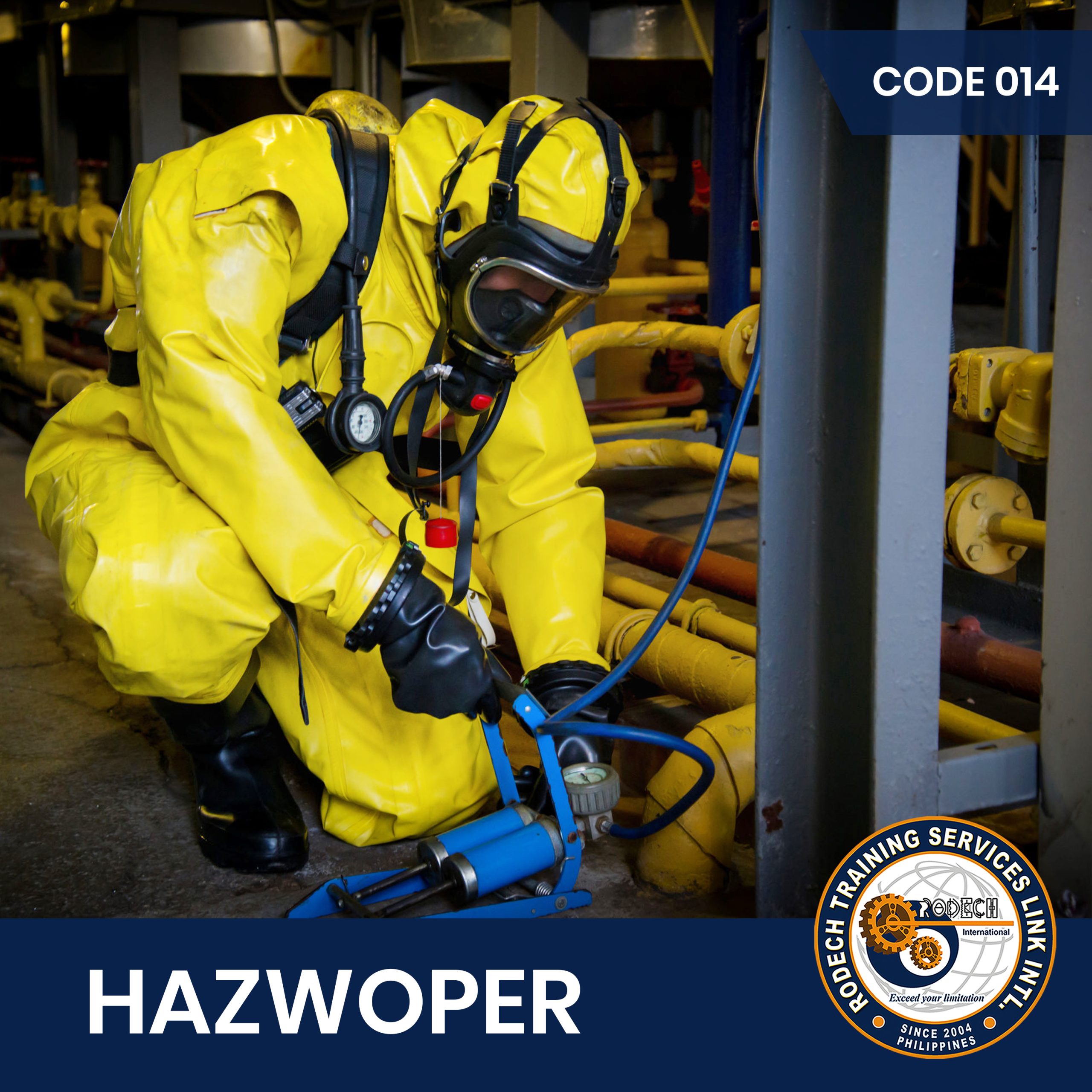
HAZWOPER training prepares workers to safely handle hazardous waste operations and emergency response activities. It covers chemical, physical, and biological hazards; exposure control; decontamination; emergency procedures; and the use of specialized PPE and monitoring equipment. The course is required for workers involved in cleanup operations, corrective actions, emergency response, and storage or disposal of hazardous substances.
Course Modules:
- Regulatory Framework and Hazard Fundamentals
- OSHA HAZWOPER standard and scope.
- EPA and DOT roles in hazardous materials.
- Hazard classes, routes of exposure, and toxicology basics.
- Safety Data Sheets and hazard communication.
- Chemical, Physical, and Biological Hazards
- Flammables, corrosives, toxics, oxidizers, and reactive chemicals.
- Physical hazards such as heat stress, noise, confined spaces, and electrical risks.
- Biological hazards in waste sites and flood-damaged areas.
- Site Characterization and Hazard Assessment
- Pre-entry surveys and hazard identification.
- Air monitoring and sampling strategies.
- Site control zones: exclusion, contamination reduction, and support zones.
- Work permits and safe work procedures.
- Personal Protective Equipment
- Levels of protection (A, B, C, D) and selection criteria.
- Respiratory protection and fit testing.
- Donning, doffing, inspection, and maintenance.
- Limitations and failure modes of PPE.
- Air Monitoring and Instrumentation
- Direct-reading instruments for gases, vapors, and particulates.
- Calibration, bump testing, and interpretation of readings.
- Use of multi-gas meters, PID/FID detectors, and colorimetric tubes.
- Decontamination Procedures
- Personnel and equipment decontamination lines.
- Containment, neutralization, and waste handling.
- Preventing cross-contamination and secondary exposure.
- Emergency Response and Incident Command
- Spill response strategies and containment methods.
- Incident Command System (ICS) roles and communication.
- Evacuation, shelter-in-place, and emergency medical procedures.
- Fire behavior and chemical reaction hazards.
- Medical Surveillance and Worker Health
- Pre-placement and periodic medical evaluations.
- Heat stress monitoring and hydration strategies.
- Recognizing signs of chemical exposure or PPE stress.
- Site Safety Plans and Documentation
- Job hazard analysis and work planning.
- Site-specific safety and health plans (SSHP).
- Logs, reports, exposure records, and regulatory documentation.
- Practical Exercises and Field Scenarios
- Simulated spill containment and cleanup.
- PPE level selection and full-gear operations.
- Air monitoring drills and hazard mapping.
- Decontamination line setup and execution.
A well-structured HAZWOPER course strengthens hazard recognition, decision-making, and safe work practices in environments where mistakes can have severe consequences. Given your background in safety, rigging, HVAC, and field training, this framework can be adapted into a full training program for your team.
Course Objectives
Participants completing the course should be able to:
✔ Identify hazardous substances and understand their health and safety impacts.
✔ Interpret Safety Data Sheets and hazard communication systems.
✔ Perform hazard recognition and risk assessment at contaminated sites.
✔ Apply exposure control strategies, including engineering controls and PPE.
✔ Conduct safe entry, work, and exit procedures in hazardous environments.
✔ Implement decontamination processes for personnel and equipment.
✔ Respond appropriately to chemical spills, releases, and emergency situations.
✔ Understand site control, work zones, and incident command structure.
✔ Maintain required documentation and comply with regulatory requirements.
Key Features of a Strong HAZWOPER Course
✔ Alignment with OSHA 29 CFR 1910.120 requirements.
✔ Hands-on practice with PPE, air monitoring, and decontamination.
✔ Scenario-based exercises simulating real hazardous waste sites or spill events.
✔ Integration with emergency response systems and incident command.
✔ Emphasis on medical surveillance and worker health monitoring.
✔ Clear focus on site safety plans, job hazard analysis, and work zone control.
✔ Practical demonstrations of spill containment, sampling, and monitoring.
✔ Reinforcement of communication, teamwork, and situational awareness.