
CODE-003: ICAM- Incident Cause Analysis Method
Home / Training
Duration: 3 days
Modules: 9
Sectors: All Industries
Number of Certificate: 1
Course Fee
- FREE access RVU
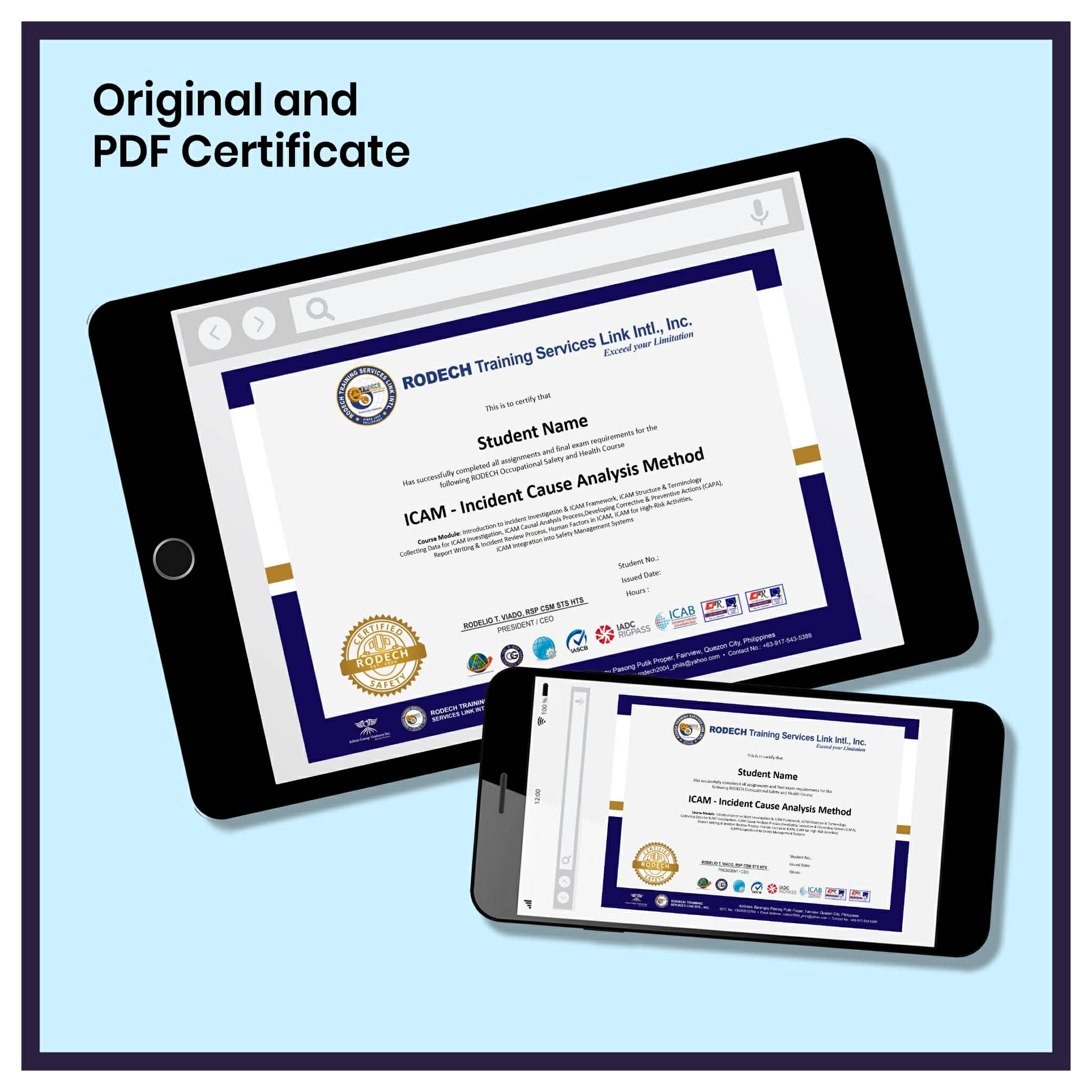
- $70 PDF & Original Certificates
- $55 PDF Certificates
Shipping & Handling not included for original certificates
Program Overview
The Incident Cause Analysis Method (ICAM) Training is designed to equip safety professionals, supervisors, and managers with the skills to investigate workplace incidents effectively and identify root causes. This structured approach ensures that corrective actions address systemic issues rather than symptoms, reducing the likelihood of recurrence
Objectives:
- Understand the principles and framework of ICAM.
- Learn how to collect and analyze evidence following an incident.
- Identify contributing factors, including organizational, task, and environmental elements.
- Develop actionable recommendations to improve safety systems and prevent future incidents.
Key Features:
- Practical case studies and real-world scenarios.
- Hands-on exercises in incident investigation and reporting.
- Focus on compliance with international standards and best practices.
Ideal For:
- Safety Officers
- EHS Managers
- Supervisors and Team Leaders
- Anyone involved in incident investigation and reporting
Course Modules:
Benefits:
- Enhance your ability to conduct thorough investigations.
- Improve organizational safety culture through systemic analysis.
- Gain a globally recognized skill set for career advancement.
- Lead or facilitate the investigation of significant incidents
- Provide support and advice on investigation quality issues
- Recognize the need for an investigation
- Understand the 7 elements of an investigation
- Lead the investigation and data collection process
- Interview victims and witnesses effectively
- Differentiate between types of human error and violations
- Understand the ICAM incident causation model
- Apply ICAM to determine the root causes of incidents
- Make recommendations to prevent recurrence and reduce risk